I have been really enjoying working with “my” 7th-graders over the last few weeks as we explore what it means to be a scientist! The “Be A Scientist” program is organized by Berkeley-based Community Resources for Science, who partner with Berkeley Public Schools to bring local volunteer scientists (students, postdocs, faculty) to the classroom for a 6-week start-to-finish science project. We guide the 7th-graders in formulating their questions and hypotheses, designing experiments, collecting data, and interpreting and presenting their results. This has been an amazing and fast-paced experience to see how the different students each approach questions and problems. They are incredibly quick to adapt to changing plans and to accept unforeseen results. I am learning a lot, both about what gets them excited and about how they ask questions about the world around them. Slimy, gooey science!
Working in a public school in Berkeley is exciting on many levels; it brings me out of my specialized sub-field (plant cytology, biogeography, and systematics) and gives me the opportunity to communicate about the scientific process to a diverse group of citizens in their formative years. My hope is that my enthusiasm for my research with plants—and for science more broadly—will make a lasting impression on the students and show them that science (as well as math, careful planning, researching an idea and following through with the investigative process…) can be fun and satisfying. Of course, the scientific process can be messy at times, and a “failed” experiment will often teach us more than we expect. I am very grateful for this experience that is bringing me in contact with some interesting and bright young people. Their curiosity, insightful questions, and flexibility has certainly made an impression on me!
I am looking rather amazed by a coil of pipe-cleaner presented by J., as A. prepares her wicks for growing salt crystals. Photo by Tyler Chuck, CRS.Darlene, Project Coordinator for Community Resources for Science, has been in the classroom every week, helping students set up their experiments and providing support for the mentors. Photo by Tyler Chuck, CRS.
Introducing the Pteridophyte Collections Consortium
UC Berkeley is the lead institution on a freshly funded TCN (Thematic Collections Network–part of NSF’s Advancing the Digitization of Biodiversity Collections [ADBC] program): The Pteridophyte Collections Consortium (PCC for short). Cindy Looy, Diane Erwin, and myself are the Berkeley PI team, aided and abetted by our Portal Manager Joyce Gross and our Project Manager Amy Kasameyer.
The focus of this grant, and of the PCC, is to digitize over 1.6 million extant and fossil pteridophyte specimens from 36 herbaria and museums throughout the U.S. For each specimen an image will be taken, and the collection data digitized–both images and the digital collection data will be available online through our Symbiota portal and data aggregator sites such as iDigBio, and the Global Biodiversity Information Facility (GBIF). The other main goal of the PCC is to help unite the paleontological and neontological pteridology communities (the people interested in fossil and living pteridophytes, respectively). Typically, these two communities tend to be in different university departments, go to different conferences, and their study collections are housed in different institutions (paleontology museums and herbaria). The PCC will bring these communities, and their collection data, together in a single location, and promote an integrated approach to the study and appreciate of pteridophytes from their origin ~420 million years ago to the present.
The Pteridophyte Collections Consortium (more posts on this soon!) represented at the 2018 ADBC (Advancing Digitization of Biological Collections)/iDigBio summit in Gainesville, Florida, in the first week of October. It was simultaneously overwhelming and inspiring–we have a lot of pteridophytes to digitize!
Carl presenting the PCC introductory lecture at the iDigBio summit.
Look at all those digitizers! Plus that oak is probably full of Pleopeltis.
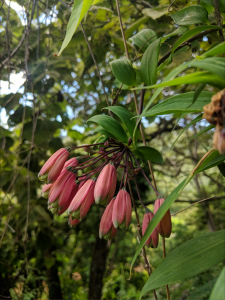
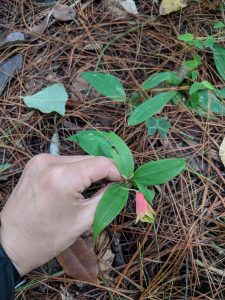
I spent the past six weeks collecting populations of Bomarea edulis for my dissertation research. In Mexico, B. edulis (and indeed the entire family Alstroemeriaceae) is at the northern extent of its range, providing a unique opportunity to study population dynamics and phylogeographic history of the edible species. Along the way, I also collected some neat looking ferns, including one species of Bommeria, which sounds a lot like Bomarea but is actually a cute rock-loving Pteridaceae.
Bomarea vs. Bommeria
Forming Collaborations
While in Mexico, I collected specimens from populations in Morelos, Veracruz, Querétaro, Oaxaca, and Chiapas. These populations represent most of the variation in range and habitats for Bomarea edulis within Mexico. This kind of trip would not have been possible without support from many local herbaria and research institutions, who provided invaluable local expertise on potential collecting localities, transport to the field, collecting supplies, and other resources. A huge thanks to the people from la Universidad Autónoma del Estado de Morelos, la Universidad Autónoma de Querétaro, el Instituto de Ecología, la Facultad de Ciencias y el Instituto de Biología de la UNAM, the Eizi Matuda herbarium of UNICAC, and the Benemérita Universidad Autónoma de Puebla!!! This trip would not have been possible without their generosity and knowledge.
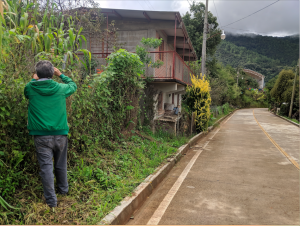
Rafael Torres photographing Bomarea edulis in the town of Santiago Comaltepec, la Sierra de Juárez de Oaxaca
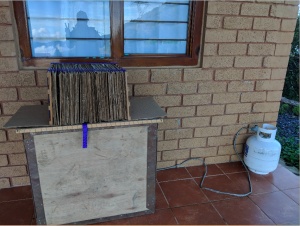
Field ready with a portable drying oven set up outside our cabin in the Sierra de Juárez
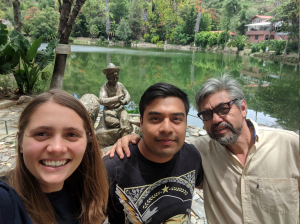
With collaborators Rafael Torres and his student Rolando
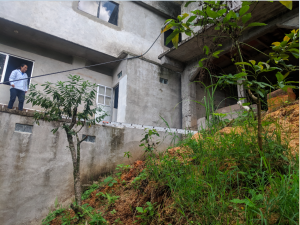
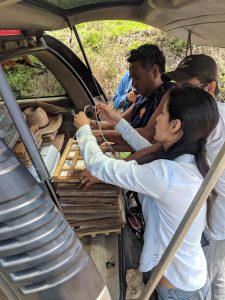
Yolanda Pantoja finding her way into the carpenter’s trash pile to sample Bomarea edulis
Appropriately carrying her plant press from city to city.
Collecting team from Morelos – featuring Dani and Chema
Bomareas Galore!
Worries that it might be hard to find Bomarea edulis proved to be unfounded. In Morelos, the plant is pretty weedy along old roads and trails. While it was harder to find in Veracruz and Querétaro, the species is also quite common in the right habitats of Oaxaca and Chiapas. I was also able to collect some individuals of Bomarea acutifolia, the only other species of the genus that reaches Mexico.
A morphologically distinct population of B. edulis in southern Morelos
A very diminutive B. edulis from San Cristobal de las Casas, Chiapas
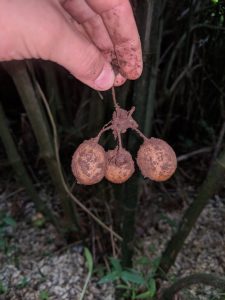
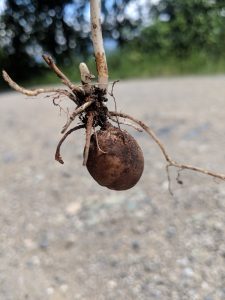
B. edulis tubers (very little rhizome)
More tubers!
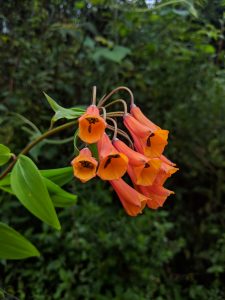
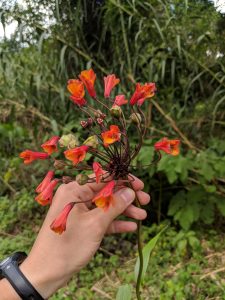
Bomarea acutifolia from Oaxaca
Bomarea acutifolia from Veracruz
Will Travel for Plants
While looking for Bomarea, I was able to visit some absolutely fabulous places in Mexico. I am blown away by the country’s natural beauty, unique combination of ecosystems, and biota.
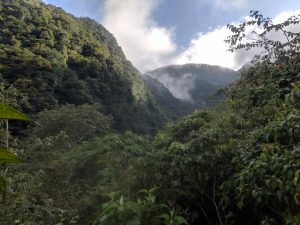
Mountains near Orizaba, Veracruz
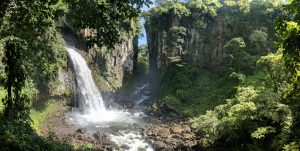
Impressive waterfalls from Xico, Veracruz
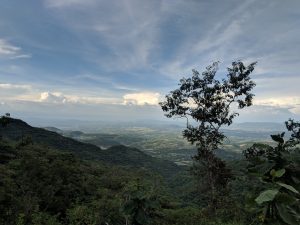
Looking out over southern Morelos state
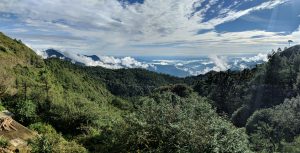
Above the clouds in the Sierra de Juarez, Oaxaca
Rooftop sunrise from Tuxtla Gutierrez, Chiapas
Beautiful town of Coatepec, Veracruz
More plants?
For now, that concludes my field work for this project. I hope to be able to sample from populations in Western Mexico, but thanks to herbaria often such ‘deficits’ in field collections can be filled in with preserved specimens. The national herbarium in Mexico, MEXU, was generous to allow me to sample leaf tissue from their collections. Stay tuned for potential future trips!!
Back in the spring, three incredible budding scientists visited the lab!
Highlights from the visit include a lengthy discussion on how DNA and morphology data can sometimes have conflicting signals in support of certain evolutionary relationships. Oh, and not to forget these two awesome questions:
“So what was the first plant… and I dont mean the first LAND plant!?”
“How do you get permission to actually get the plants into the US from the field?”
We thank Charmin, Phoenix, Mingus and Rafa for stopping by the lab and sharing their excitement for science!
The Rothfels lab made quite an appearance in Rochester, Minnesota at Botany 2018. Talks were given by Forrest, Mick, and Carrie in the Isoëtes, Comparative genomics/transcriptomics, and Macroevolution sessions and Abby and Mick both presented in the poster session! For Mick, Carrie, and Abby, this was their first time attending a Botany conference. So exciting!
Mick, as well as friends of the Rothfels lab Jesus Martinez-Gomez and Isaac Marck received research grants from the American Society of Plant Taxonomists and were recognized at the ASPT banquet.
Our matching Rothfels lab t-shirts (made by Abby) turned out to be very popular. Unfortunately, we did not manage to get a group picture wearing them together.
The closest thing we got to a group picture with some Berkeley folks. From left to right: Jesus Martinez-Gomez, Mick Song, Carrie Tribble, Will Freyman, Isaac Marck, Abby Jackson-Gain, Jun Ying Lim
Mick insighfully answering questions from Abby about his posterASPT Award recipients. Isaac and Jesus are in the top left corner. Mick not picturedCarrie preparing to give her talk. What lovely tubers!Mick in the midst of his talkAbby’s poster – first time presenting at a conferenceRothfels Lab official T-shirts. Illustration roughly based off of a Pleopeltis. Notice that the rachis is made of DNAAward recipient Mick!Berkeley graduate student Isaac Marck foraging for nettles nearby the conference center to brew for tea
Here is a report from Forrest:
Botany 2018 – Seed-free plants ascendant in Rochester Minnesota
Most years at Botany, those of us with seed-free plant interests get, at most, one half day with our favorite photosynthetic organisms before having to suffer through listening about flowering plants for the rest of the convention. But at Botany 2018, the ferns and lycophytes got their long overdue time to shine. For the first two days of the conference, the seed-free plants were on full, glorious display, with not one, but three full sessions dedicated to ferns and lycophytes. For someone who dearly loves the seed-free plants, this was refreshing in the extreme.
While the first day was the icing, the real cake came the second day. In honor of one of the world’s premiere Isoëtologists, Dr. W. Carl Taylor, there was a full session dedicated to one of the most amazing (in my not humble and totally biased opinion) land plants, Isoëtes. Opening with Dr. Robbin Moran delivering a short biography on Dr. Taylor, what followed was a series of talks ranging from the paleo-history of the order to updates from members of the Isoëtes community from around the world on their efforts with the genus. As Isoëtes rarely gets more than a cursory mention at these conferences, it was very enjoyable to listen to half a day dedicated to a genus that doesn’t get nearly as much attention as it should.
After the second day, I don’t really remember much else, having spent all of my mental energy on the first two (actually being engaged with the talks will do that to a person). Overall, this year’s Botany was probably my favorite yet, and will likely remain so for many years.
Report from Abby:
Botany 2018 – Abby’s first Botany conference
This year was my first time attending Botany and what an exciting event! I attended the pre-conference field trip to the Forestville/Mystery cave state park, focused on “microhabitat extremes.” Karst features in the limestone (areas where rock has dissolved away, leaving behind caves and cracks) can hold ice in their crevasses year round. That, combined with airflow through the rock causes small areas of cold air where you find populations of plants growing disjunct from larger populations found in colder, more northern areas. The bedrock of the area was all Ordovician limestone which was very exciting for me because I spent the beginning of this summer doing geology fieldwork in Oklahoma on the same fossil assemblages in Ordovician limestone. We saw many trilobites, brachiopods, gastropods, echinoderms, and a few cephalopods!
The rest of the conference was great as well. I attended some paleobotanical talks as well as the macroevolution and island biogeography sessions. It was very exciting to meet so many botanists and to be exposed to the current botanical research that is going on. I felt like I was witnessing the forefront of science!
**A warning to fellow poster authors: don’t leave unattended poster tubes in the Mall of America. Mall security might think its a bomb and you’ll have to be interrogated and wait for a police dog to investigate before they give it back. Carrie and I had the pleasure of experiencing this as we were trying to make it to the airport to catch our flights.
A rare bluff prairie in Forestville state park. We were up on top of a limestone cliff in this pictureLimestone cliff with spring water coming out of a karst feature in Forrestville state parkSecurity dogThe security officer was very polite as he interrogated usFinally escaped with the poster tube!
Attention fans of underground morphology!! Check out this post highlighting upcoming research presentations at the Botany 2018 conference. If you’re around, come check out talks by Carrie (that’s me!!) and her collaborator Cody. Long live geophytes!